
All porcelain crowns are used when a large portion of the tooth structure has been lost. The loss can be due to breakage, tooth decay, root canal, or a large filling that has failed.
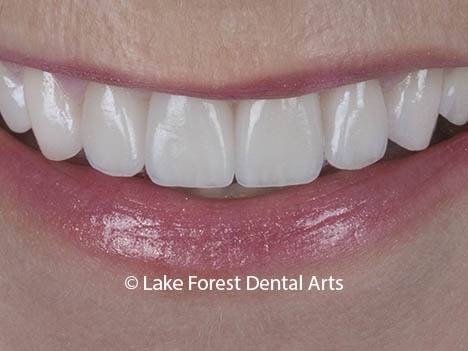
All types of crowns can be beautiful and natural. This sweet Wilmette lady came in with a hosh-posh of old PFM caps done by three different dentists. Some were opaque, some had black lines at the gum line, and some did not match. We listened carefully to how she wanted them to look. She got the look that she was after!
Crowns without metal are preferred in the front of the mouth. The non-metal versions are beautiful and appear real. There are many types used in different situations depending on the patient’s needs.
All porcelain crowns have many benefits
We prefer to use ceramic versions over those made with metal. The dark line at the gum line of crowns containing metal won’t develop. Less drilling is needed because ceramic restorations are not as thick. They will not stain or change color. Ceramics are more bio-compatible than metal which may reduce gum recession.
Types of all porcelain crowns | How are they made?
E Max – layered
E Max is the newest type of cosmetic material used for porcelain dental crowns and porcelain veneers. Just like conventional porcelain fused to metal crowns, they are made with two layers. There is a strong and durable supporting layer called the coping. A lifelike top layer is applied on top of the coping by an ceramic artist to match the restoration to the natural teeth.
Emax is the preferred ceramic system for anterior teeth. It is both bio-compatible and has the long term wear pattern like that of enamel. Emax can be used for minimally prepared veneers or crowns as thin as 0.2mm. It makes beautiful restorations that are 2.5 to 3 times stronger than the other glass-ceramic systems used today.
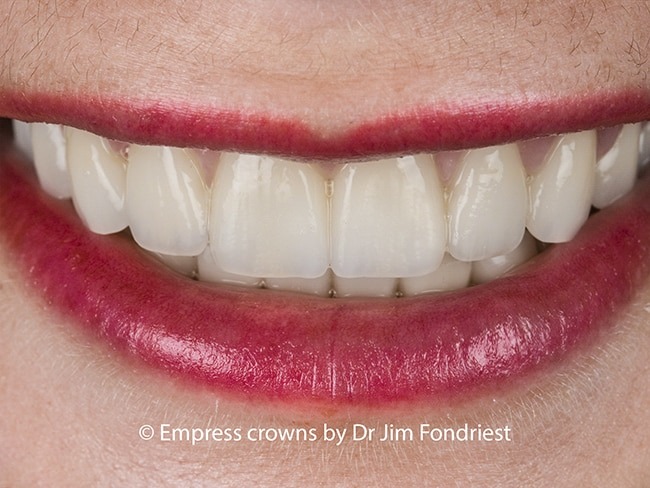
The 12 front teeth were restored to create “a very specific look” that this Highland Park patient wanted. She insisted that her new teeth look natural.
E Max – Monolithic Porcelain crowns
E Max Crowns is a one layer system using only the coping layer. The E Max coping is beautiful on its own. It does not use the weak top layer and is more resistant to chipping.
Usually, it is the custom top layer of ceramic that is the weak link with all-porcelain systems. E Max monolithic is a good choice to create porcelain crowns suitable for nighttime bruxers or tooth grinders.
Zirconium
Zirconium crowns are considered to be the ultimate in strength. This ceramic is used to make one or two layer restorations.
The coping is extremely strong but is opaque and ugly. Two layer versions can be made to be attractive but are no stronger than E Max layered.
The base coping is milled and has a weaker baked on top layer. This top layer is used to make the restoration attractive and lifelike. The thicker the top layer the less you see of the coping underneath. More drilling allows the veneer to mask the opaque bright white coping.
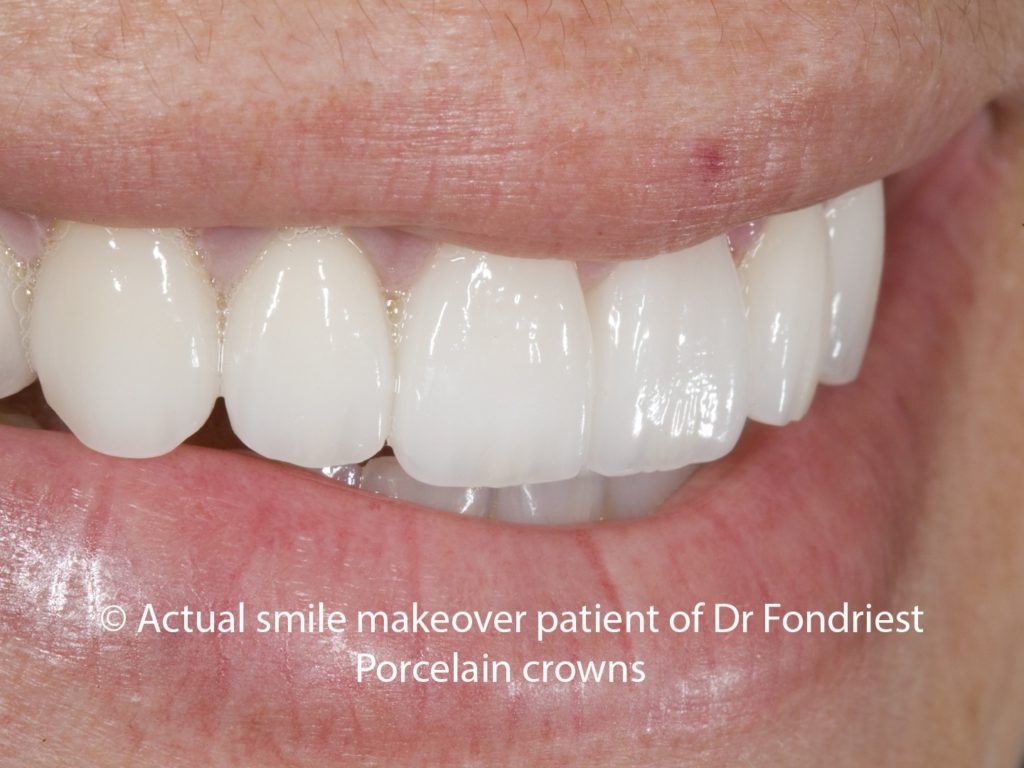
This Chicago patient wanted “natural but just a little bit brighter”. When her treatment was done, she had a radiant beaming smile. Many friends noticed a change in her. Some just thought that she looked well rested. Others thought that she had been exercising and had lost weight! When dentistry appears believably natural, it will keep people guessing what you did.
Empress Porcelain Crowns
Empress can be made with the appearance of natural teeth. Due to lack of strength, Empress is losing popularity.
This ceramic has two layers, a medium strength coping, and a weaker baked on top layer. The top glass layer is hand stacked and fired onto the pressed base coping beneath. Blessed with only modest strength, Empress should never be used in grinders.
Cerec and Sirona | Trading Quality for Speed
Cerec and Sirona milling technology is growing in market share. The brand names Cerec and Sirona are “in the dental office” CAD milling machines.
Onlays or caps are milled from monolithic ceramic blocks. These tooth shaped caps can be created in one visit. They can only be customized by using surface stains that wear off over time.
The popularity of these low priced milling machines is growing in average dental offices. There are three benefits that motivate dentists to use this inferior system. Cutting out the lab technician fees creates a financial incentive. The technology appears to be impressive to the patient. Temporary crowns are not needed and it can be completed in a day.
What do porcelain crowns cost?
Costs vary with the time, expertise, and materials used. Early in a dentist’s career, he/she will choose the quality level that they want to practice at. The ceramist quality level and cost will match. Typically, a high end dentist will take more time, have better technique, and use better materials. They will work with a more expensive dental laboratory.
It is the ceramist who actually makes the restoration and charges the dentist directly for the service. Dental lab fees for a single cap will vary widely from $25-$2000. Obviously, the craftsmanship, fit, and longevity vary widely also.
The total fee for a single all-porcelain cap could be anywhere from $900 to $4500. Do not assume that the dentist charging $3000 is making any more money per ceramic crown than the dentist charging $2000. Dental insurance pays varying amounts but rarely more than $700 per tooth.
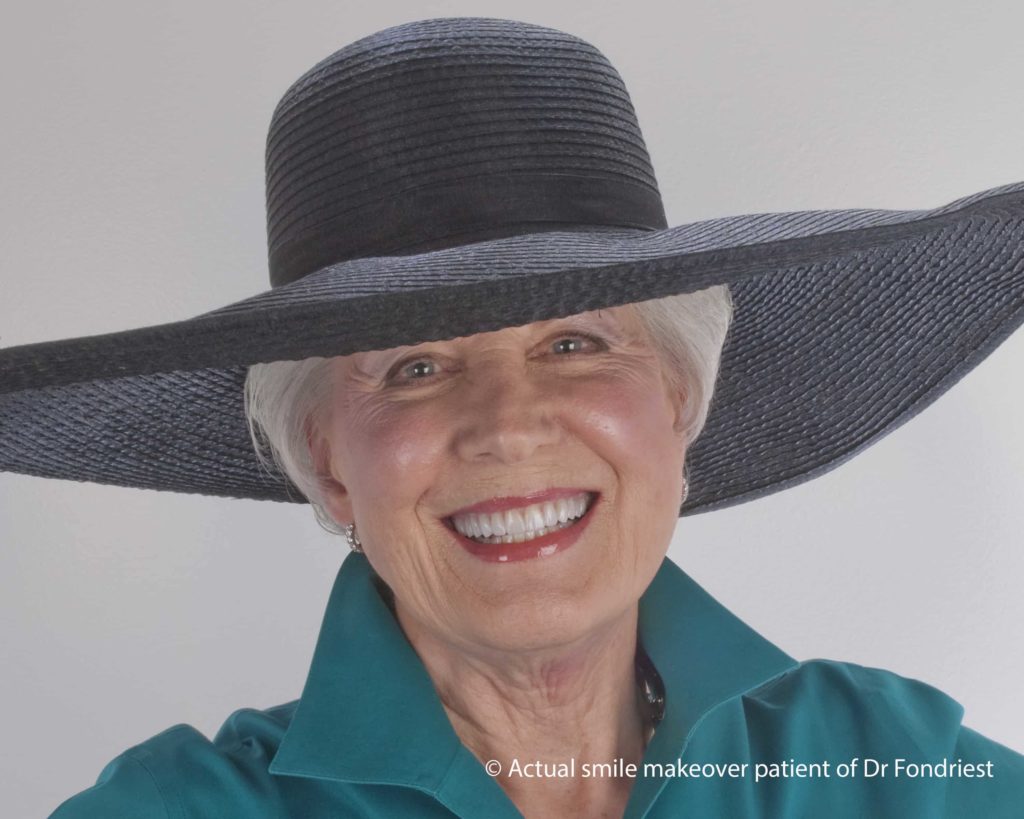
This patient requested a clean, uniform, and natural smile. She helped us create something that matched her goals.
The quality levels of porcelain crowns vary tremendously
A better version will look more natural and have better oral health. It will have a better bite, be stronger, last longer, fit better, and will not fray or snap your floss. The gum tissue will be healthier. The natural tooth underneath will be less likely to decay or leak.
The old adage “you get what you pay for” very often applies. Find a dental professional that has the training and the experience. The dentist should do these procedures all of the time. They should have before and after photos of cosmetic dentistry to prove it.
How strong are porcelain crowns?
The most popular porcelain type is E Max. The strength is determined by thickness and how it is attached to the tooth. If the cap is more than 1.5 mm thick and bonded to enamel, it will be as strong as any alternate type.
Dr. Fondriest is a highly sought after cosmetic dentist. He serves clients from throughout the United States.