
What is a Porcelain Fused to Metal Crown?
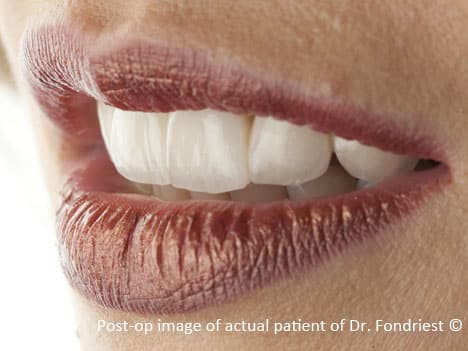
Porcelain fused to metal crowns were designed to appear like natural teeth for this Chicago socialite. Strong metal supported “caps” were selected due to this patient’s chronic clenching and bruxism habits.
Porcelain fused to metal crowns have long been considered the gold standard for the repair of damaged teeth. This type of design has been and continues to be the most common type of crown or bridge done in dentistry for 35 years. They are cast metal with a porcelain covering over them. The tooth colored ceramic is baked on top of a metal alloy base called a coping for the ultimate in strength. The metal base is thin, and strong, and fits perfectly over the prepared teeth.
The baked on porcelain layer is 1.5 mm to 2 mm thick. It is fashioned to have the same anatomy and optical characteristics as a natural tooth. The porcelain layer is tough and withstands chewing forces from the opposing teeth. You could look at them as a hybrid between all porcelain and all gold crowns.
Alloy/Metal Choices
The dentist will choose what type of metal to use depending on the quality level of the office. The types of alloys used go from low quality and cheap chrome-cobalt to expensive gold alloys. High noble gold alloys are the highest quality choice due its accurate fit and bio-compatibility.
Uses of a porcelain fused to metal crown
Although all porcelain crowns are strong, there are many times when a ceramic over metal version is a better choice. The porcelain fused to metal crown is stronger and more versatile in many clinical situations. It is often used when destructive night grinding is a problem or when long span bridges are needed.
This type of crown can take more chewing force than all porcelain versions. The longevity and esthetics of these restorations will vary significantly depending on the quality level of the dentist and lab technician team that makes it. Absolutely fabulous esthetic results can be achieved with these restorations if your dentist works with a true ceramic artist.
Advantages and disadvantages of porcelain fused to metal crowns
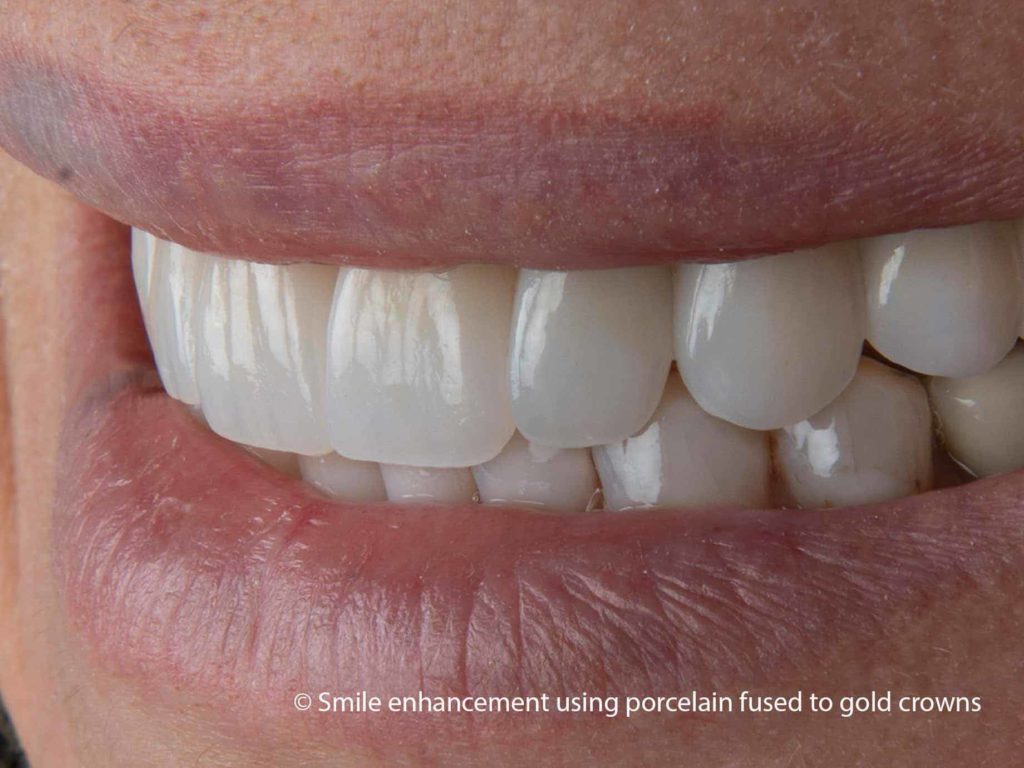
Strong translucency is difficult to achieve with porcelain fused to gold crowns. The metal coping blocks all light from going through the tooth. The translucency evident in these caps can only be created by a master lab technician.
Advantages:
- The underlying metal support makes your cap stronger and more durable than all ceramic crowns.
- They have a very high rate of success in the long run. The track record for these caps is 70 years.
- They are a preferred choice when long bridges are required and night grinding is a problem.
- When made with a high noble metal, the substructure is very bio-compatible. When the dentist chooses gold as the metal substructure, it is totally non-reactive and does not irritate gum tissue or bone. As long as the fit is good, the tissue will be very healthy.
- They can be cemented even when the tissue is unhealthy. The delivery process is much less complicated and usually can be done without novacaine. Porcelain versions require bonding with gum tissue management. If the tissue is unhealthy, it is difficult to get a perfect seal.
- Fewer issues with sensitivity after they are delivered into the mouth
- They are more attractive than metal dental crowns
Disadvantages:
- A high quality metal based crown is more costly because the lab fee is higher to get the same level of esthetics as an all porcelain cap. Their popularity is declining in favor of pretty porcelain crowns. All porcelain versions without a metal base are easier to make pretty at a lower lab fee price point.
- A porcelain fused to metal crown is totally opaque to light. It will not transmit light down the root of the tooth. Lighting a non-restored natural tooth will brighten the gum below. The light travels down the root. The bright root brightens the gum above it. When the gum tissue is thin, it is more translucent than what is below. This type of cap does not illuminate the gum area or the front teeth. The resulting darker gum can be very visible in some patient’s smile.
- The porcelain can chip off when you bite on very hard foods.
- At least 2mm of enamel has to be removed for a POM. The more natural tooth structure that remains the better.
QUALITY LEVELS and COSTS of a porcelain fused to metal crown: Non-precious vs. high noble gold
Depending on what market niche your dentist operates in determines what your porcelain-on-metal restoration will look like. The average American dentist will contract with a lab to make your cap for about $155. This cost is usually hidden and rolled into the fee for service that the dentist charges you.
An average cap will have a medium quality ceramic fused or baked over a base metal (non-precious alloy or low noble) coping. It will approximate the shape and coloration of a natural tooth. The dark metallic coping will be exposed at the margin or edge yielding a dark or black line at gum. For $60 more, the dentist could request a “porcelain butt joint margin” so if or when the gum recedes, an exposed metal margin will not appear.
Patients are rarely informed of lab fees
Because all the lab costs are rolled into the price of the service, patients are rarely informed of what their dentist is selecting and prescribing for them. An inexpensive dental office might pay as little as $35 as a total fee for a mass production laboratory which is often offshore to make your restoration. At this level of quality, the metal base will be an inexpensive non-precious dental alloy and the ceramic will be more opaque. Cheaper alloy does not cast well and will not fit as intimately and has less bio-compatibility. Cheaper PFM crowns will have a black line at the base of the crown at the gum line right from the beginning.
What makes a Porcelain Fused to Metal Crown High Quality?
Dr. Fondriest uses high noble gold alloys under the veneering ceramic of his restorations. Gold has a warm color that is easier for the dental lab to mask with the ceramic. Needing less porcelain means less tooth reduction is required to make it attractive. Noble gold alloys will cast better producing a much better fit and it is far more bio-compatible. High quality labs charge the dentist over $700 for a POM but if your particular case has complexity or many teeth are being done at the same time the laboratory costs to the dentist can rise to $1500 for each restoration. At this level of quality, PFMs can mimic nature’s beauty.
Read more about high quality dentistry.
Dr. Fondriest is a Nationally recognized and highly sought after cosmetic dentist. He serves clients from throughout the United States