
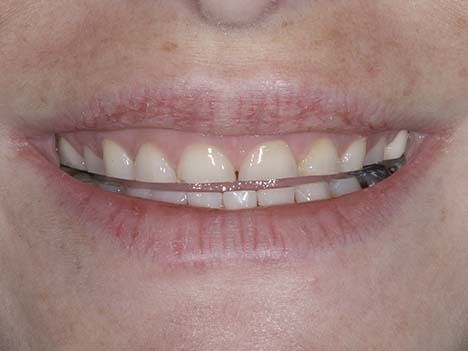
 Before
Can night time tooth grinders get veneers?
This patient lived on Whidbey Island, Washington and did not have access to a dentist who did more complicated prosthodontics, specifically dealing with bite issues. Her family dentist was a student of Dr. Fondriest's and recommended that she fly to Chicago to have her dental work done. She had lost a significant amount of tooth structure due to bruxism (night time grinding) and had broken much of her previous dentistry.
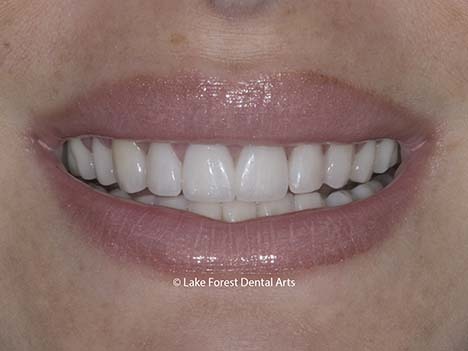 After
AfterVeneers for bruxer-tooth grinders
Can you get veneers if you grind your teeth? Yes, if you get the right kind of veneers. The patient had a gum lift and bruxism veneers done to her upper front teeth. Theses special veneers were created with a shape and appearance that she specified. They were made with a very strong porcelain that will stand up to bruxism. She had her lips done too! This patient was only 26 years old!
Bruxism Veneers for worn teeth – Replacing lost tooth enamel
Bruxism is a condition that many suffer from. It can lead to other health issues such as jaw joint damage and re-occurring headaches. In the past, dentists either removed the heavily worn teeth or they crowned them. Dentists can now make veneers for worn teeth. Veneers are thin sheets of ceramic that cover the fronts of teeth and replace all of the lost tooth structure. This new treatment conserves tooth structure. Dr. James Fondriest is one of the early developers of this technique. His custom porcelain veneers can replace lost tooth enamel caused by bruxism. He calls them “Bruxism veneers”.
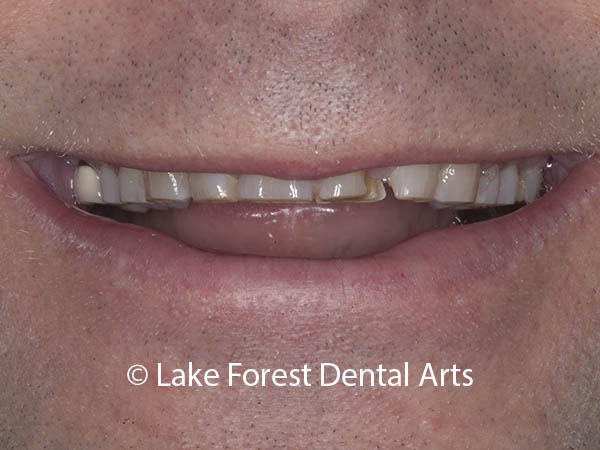
This patient was an extreme bruxer. He would grind his every night. Less than half of the exposed tooth remained. Prepless veneers are an option for patients like this. The dentist only removes a small amount of enamel to make room for the ceramic.
What is Bruxism?
It is normal for your teeth to wear as you age. Everyone has some amount of wear to the teeth but this amount of wear will vary greatly. A common problem is excessive tooth wear due to bruxism. Bruxism is the excessive involuntary or habitual grinding, gnashing or clenching of the jaw. Teeth grinding is usually done unconsciously, such as during sleep. Other times, anxiety or stress will cause individuals to gnash, grind, or clench their teeth.
This tooth gnashing will cause the teeth to wear much faster than normal. Excessive wear can result in frequent chipping and fracturing of teeth, food collecting between your teeth, and embarrassment from the changes in your smile. It can even change the shape of your face. Often, people who grind their teeth do not realize that they’re doing it.
Should I be worried about the loss of enamel?
Wear on teeth occurs very slowly. Many of our patients don’t notice that it is happening. Unfortunately, beyond the dental complications, people who clench or grind their teeth look older than they actually are. It results in an unattractive smile with short teeth and spaces between the teeth. Fortunately, special bruxism veneers can be made for worn teeth to replace the lost tooth enamel.
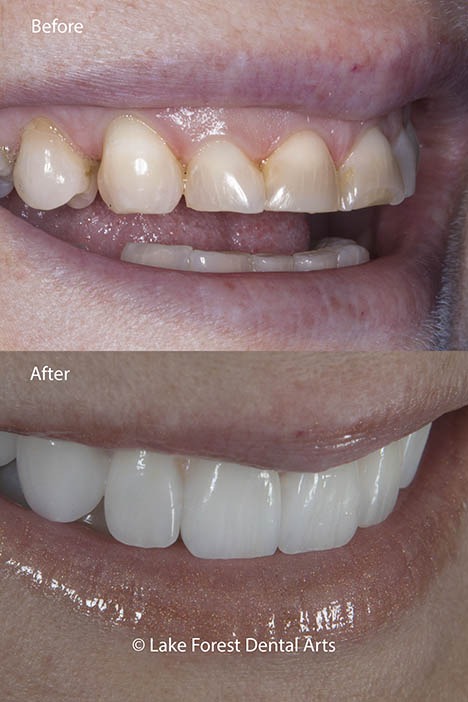
This young lady from Milwaukee had a smile that appeared much older than she actually was. She had worn her teeth to about 55% of their original length. We created these veneers for her back in 2010. They still look beautiful today!
Consequences of heavy wear: It’s not just a cosmetic issue
Many people don’t know how serious wear is. When large amounts of enamel have been lost, the inside of the tooth becomes exposed. This will cause:
- Increased risk of decay
- Uneven bite
- Facial changes – shortening of the face
- Chewing difficulties
- Chipping and fracturing of teeth
- Heavy tooth wear or damaged shortened teeth
- Bite related problems such as headaches and TMJ
Symptoms of Bruxism
Bruxism has several symptoms. Some of those symptoms include:
- Tooth pain
- Cold sensitive teeth
- Jaw and facial muscle pain
- Limited jaw movement
- Headaches that won’t go away
- Sore gums
Do composite veneers hold up to grinders?
Worn natural teeth can be built up with tooth colored composite resin to full size. This is reserved for the front teeth only when the grinding is heavy. Bonded composite on posterior teeth will not hold up. Bonded composite is a popular material in cosmetic dentistry. However, it is not offered in normal treatment plans when there is bruxism. No matter what type of dentistry is offered for bruxers, a bite guard is recommended after treatment.
Bruxism Veneers for Worn Teeth Can Replace Lost Tooth Enamel
Months and even years of teeth grinding can cause severe damage to the enamel of teeth. Porcelain veneers serve as an alternative in addressing lost tooth enamel from bruxism. Porcelain is a solid and durable material and can improve a variety of imperfections of the teeth. In addition to teeth grinding, porcelain veneers can improve upon:
- Discoloration
- Chipped or cracked teeth
- Gapped teeth
- Misaligned teeth
- Misshaped teeth
After Dr. Fondriest creates custom bruxism veneers for worn teeth, he may offer a night guard, or tooth support, to help with bruxism. You may also consider additional medical attention to address other causes of bruxism such as sleep apnea.
Offering bruxism veneers for severe tooth wear
Are you worried about your heavy tooth wear? Find out more about your oral health status by talking to your dentist. There are procedures that can repair teeth that have been damaged from tooth gnashing. Visit your cosmetic dentist today to learn more about your options.
Learn more about dental veneers for heavy tooth wear. We look forward to providing you care, in a warm and welcoming environment.
Dr. Fondriest is a Nationally recognized and highly sought after cosmetic dentist serving clients from throughout the United States