
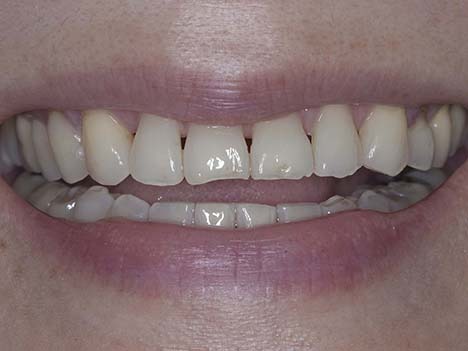
 Before
This Libertyville, IL patient wanted to fix the "black triangles" between her teeth, her tooth shapes, the heavy wear, and the uneven color. She wanted a better tooth alignment and to replace the tooth structure lost due to her night grinding habit. It is difficult to fix black triangles between teeth. Gum surgery will not fix or fill these dark triangular spaces between the teeth.
The doctor and ceramist must work together with special techniques to close these spaces. The dentist has to follow a specific drilling design. This design varies based on certain shape variations of your bone between the teeth and the tooth roots. The technician will adjust the contours of the restorations based on specific measurements provided by the dentist.
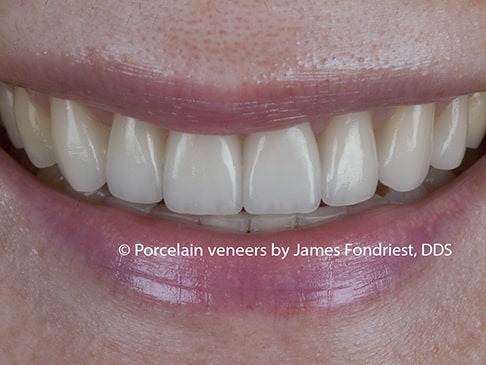 After
AfterSeven conservative porcelain veneers were used on the upper front teeth to fill the "black triangles". The veneers served several goals including improving the tooth alignment, changing her bite (occlusion), replacing lost tooth structure from nighttime grinding, and the other patient directed agendas. The designation of "conservative veneers" means that the amount of tooth drilling or preparation was conservative or limited.
Fixing lost gum between teeth is very difficult. When the dentist tries to fix it with crowns or veneers, porcelain ledges are often created. These ledges catch your floss which make it difficult to keep the gums healthy. Special attention was directed to the shape of the veneer porcelain between the teeth to close the dark spaces between the teeth while not making ledges.
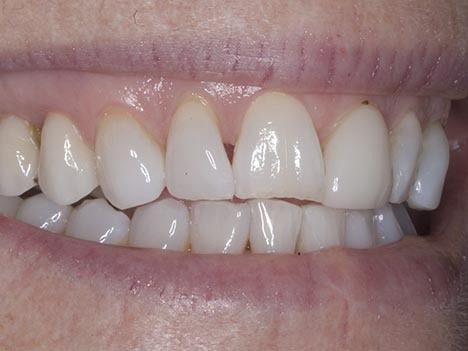
Gum recession did not cause this black triangle. This open gingival embrasure is due to the unusual shape of the lateral incisor. It can be easily fixed with bonding or a veneer.
One smile imperfection that we come across frequently is the occurrence of triangular spaces between teeth. So how do you fill these black triangles or the missing gum between teeth? Triangular dark open spaces between teeth are usually caused by gum recession, periodontal disease, or abusive dentistry. Black triangles between teeth are common problems that are difficult to correct with dental treatment. Some people are genetically prone to these unattractive triangular openings which normally are filled with gum tissue. Natural teeth come in all different shapes. The root of a tooth is normally narrower than the crown. When the root is more narrow then there is more space between the roots of neighboring teeth. This space tends to be triangularly shaped.
Normally there is gum tissue that grows in these spaces between teeth called the gum papilla. The papilla is supported and shaped by the teeth. When your teeth are straight and aligned the gum line is shaped in a symmetrical scallop pattern. The larger the triangular space the more likely it is to loose gum from these spaces.
Filling the triangular spaces between teeth is difficult
Surgically replacing the lost gum from between teeth is difficult to do. Missing tissue between teeth is close to impossible to restore with surgery. Dermal fillers and tissue grafts will not work. The task of filling the triangular spaces between teeth can be addressed by the cosmetic dentist with specially designed veneers or crowns. The design must also be altered to mask these black spaces. There are specific preparation designs that can help minimize post-operative disappointments.
There is a risk of gum loss with all dental treatments. This is less likely when the doctor plans for it. When the teeth and gums are deemed healthy and the gum line is reasonably symmetrical, then the cosmetic dentist or prosthodontist can design specially shaped veneers or crowns to fill the spaces. When black triangles are possible, the dentist must drill in certain ways. This will minimize these open spaces.
Gingival Biotypes – Types of tissue most prone to black triangles between teeth
There are normal variations in the thickness of gum tissue. Thick gum is more resistant to recession. Some people have this “Thick Biotype”, which is unlikely to recede or to lose the gum between the teeth. Others have a “Thin Biotype” that is very prone to recession and loss of the gum between the teeth. Caution is needed when doing cosmetic dentistry on teeth with a thin biotype. Experienced dentists know that gentle care is needed to prevent or limit loss of tissue.
If there is already missing tissue between teeth, the spaces can still be closed by a well trained team. The drilling may be less conservative and the shapes of the restorations are subtly modified to fill the black triangles between the teeth. A very specific tooth drilling design is required to replace the missing tissue from between teeth with a natural appearance that is cleanable.
Why did these triangular spaces form between my teeth?
The stability of gum tissue is related to the health and volume of the bone underneath. Gum tissue between the teeth can be lost for many reasons but mainly due to loss of bone. The triangularly shaped gum tissue between your teeth is called the gum papillae. When teeth are aligned evenly, the gum scallops are generally also aligned. This intimates that the shape of the scallops are symmetrical. This is considered the most esthetic and cosmetically attractive. When you lose bone volume in between your teeth due to trauma, gum disease, or shifting of your teeth, the gum becomes unsupported. Unsupported gum tissue is easily lost with the least bit of trauma. Trauma from regular eating is enough to cause the gum to slowly be lost.
Bone loss can cause black triangles
Gum disease causes the slow loss of bone between the teeth. The gingival embrasures begin to open up as the gum papillae recede up.
Can Flossing Cause Black Triangles?
Flossing is a very important part of a daily routine to keep your gums in good health. Normal flossing will not cause black triangles between your teeth. Abusive flossing or brushing can cause your gums to recede on the front surfaces but rarely between the teeth. When unsightly black triangles appear in between the teeth, it usually means gum disease is or was present.
Having braces can cause dark spaces between teeth
Braces will make the teeth look great but not necessarily the gums. When teeth are crowded, the roots contact more which leaves no room for papilla tissue growth. When braces unravel the teeth, open spaces are created where the gum has been squeezed.
This happens more frequently when the teeth are more triangularly shaped. If the orthodontist notices, they can reshape the triangular teeth with sandpaper. Making the teeth more square will partially or fully close the dark spaces.
How porcelain veneers can help fill the triangular spaces between teeth
Your dentist can treat black triangles by placing minimally invasive porcelain veneers or cost effective composite material between the teeth. This will cover unsightly gaps, as well as repairing worn, jagged tooth edges. Porcelain veneers are great for transforming several of these smile imperfections at once. These dental restorations can eliminate open gingival embrasures in as little as two office visits.
Are you ready to fix the black triangles between your teeth?
We can help fix black triangles between teeth. Dr. Fondriest and his team of dental specialists look forward to answering all your oral health questions. Contact us for a smile makeover consultation today at 847-234-0517.
NEXT CASE
Dr. Fondriest is a Nationally recognized and highly sought after cosmetic dentist. He serves clients from throughout the United States